Prologue
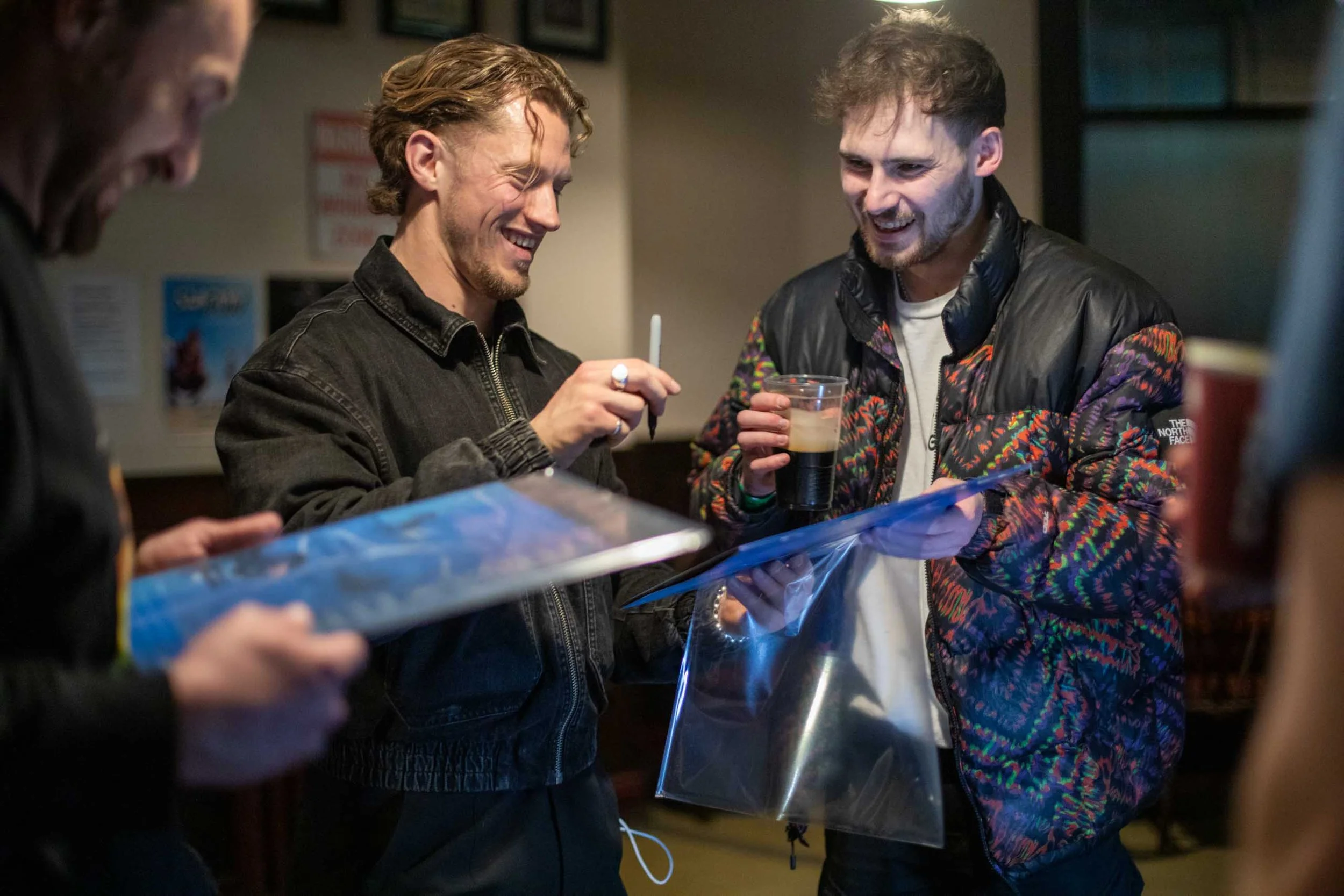
I first met Nuns of the Tundra in the green room at Gloucester’s Guildhall while I was acting as roadie and unofficial “tour mum” for n0trixx. Between cracking jokes and swapping tour stories, the gents came across as genuinely lovely people, full of energy and clearly just happy to be there.
We ended up with neighbouring merch tables, so throughout the evening we found ourselves dancing away to the other bands on stage.
Then the Nuns played.
I was completely blown away. Three guitars layered smooth but punchy riffs over basslines that cut straight through the crashing, splashing noise of it all, while Troy’s vocals sounded like Brian Molko fronting a band raised on chaos and charm. Imagine if Placebo, Pixies, and Queens of the Stone Age had a lovechild and raised it on The Mighty Boosh.
I remember thinking this was going to become one of my new favourite bands, and that I absolutely needed to photograph them properly at some point.
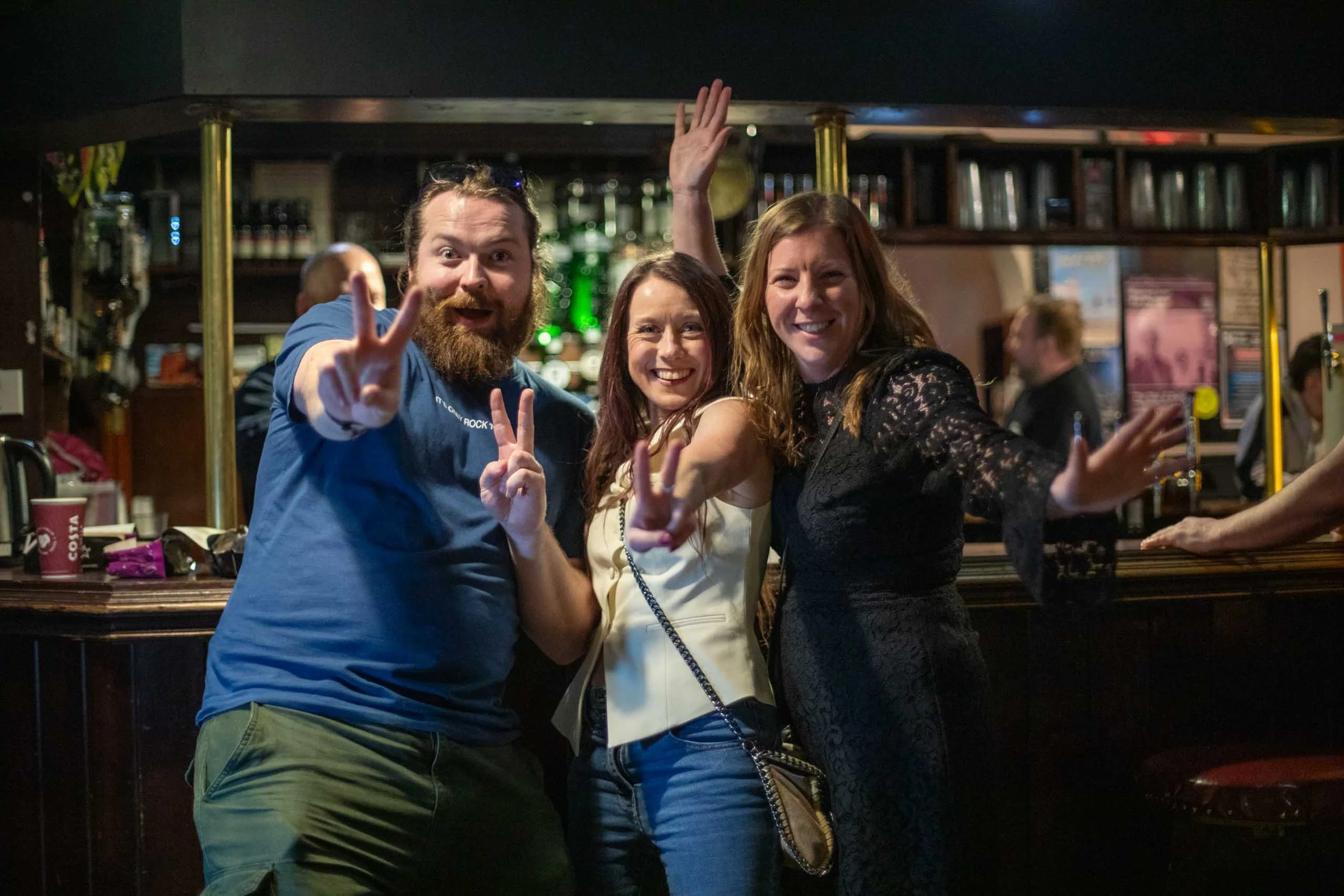
A little while later, the band kindly invited me to their sold-out show in Manchester, where we caught up again over the merch stand before the chaos of the night properly kicked off. Chips were shared, and an impromptu drum lesson was held.
Setting the scene
There’s a certain kind of unpredictability that comes with photographing live music.
You don’t get second takes. You don’t get controlled lighting. You don’t get time to think.
For this shoot with Nuns of the Tundra at Star & Garter, I prepared the same way I always do. I arrived early, checked sight lines, spoke to the lighting engineer, and mentally mapped out where I’d need to stand throughout the set.
I knew it was going to be dark. What I didn’t expect was just how close to the edge my camera would be pushed.
Preparing for the Chaos
Live music photography is a constant balancing act.
You’re thinking about:
shutter speed vs motion blur
ISO vs noise
aperture vs focus accuracy
atmosphere vs visibility
All of this without flash.
For most venues and larger events, using flash is a quick way to annoy both the band and the crowd. I’ve seen photographers warned for it before, so it’s never something you casually risk.
For this shoot, I packed light and brought fast lenses, knowing the venue lighting could swing between near darkness and sudden harsh spotlights. The plan was to lean into the mood: gritty black-and-white edits, heavy contrast, plenty of texture, and a rough, grungy atmosphere.
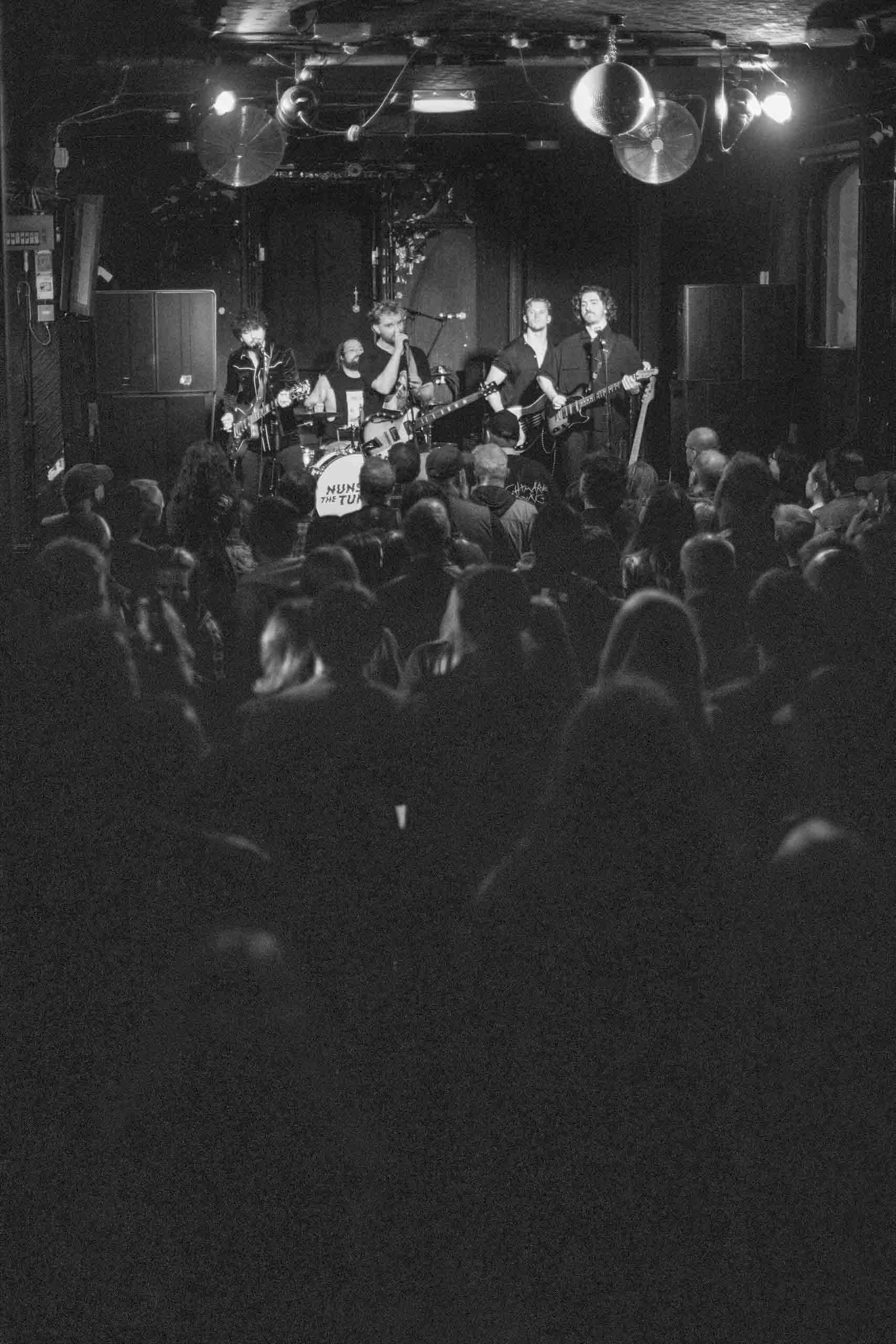
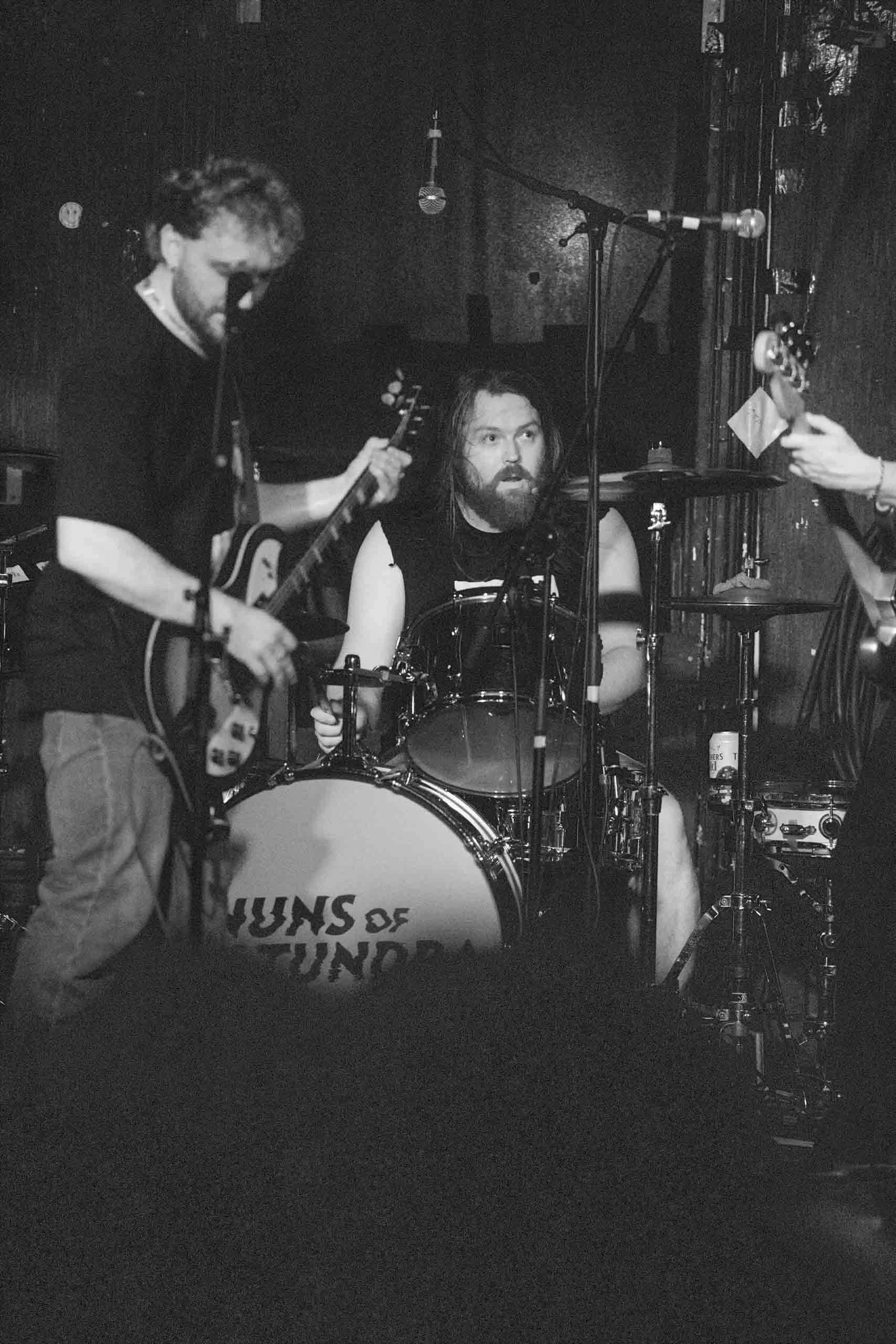
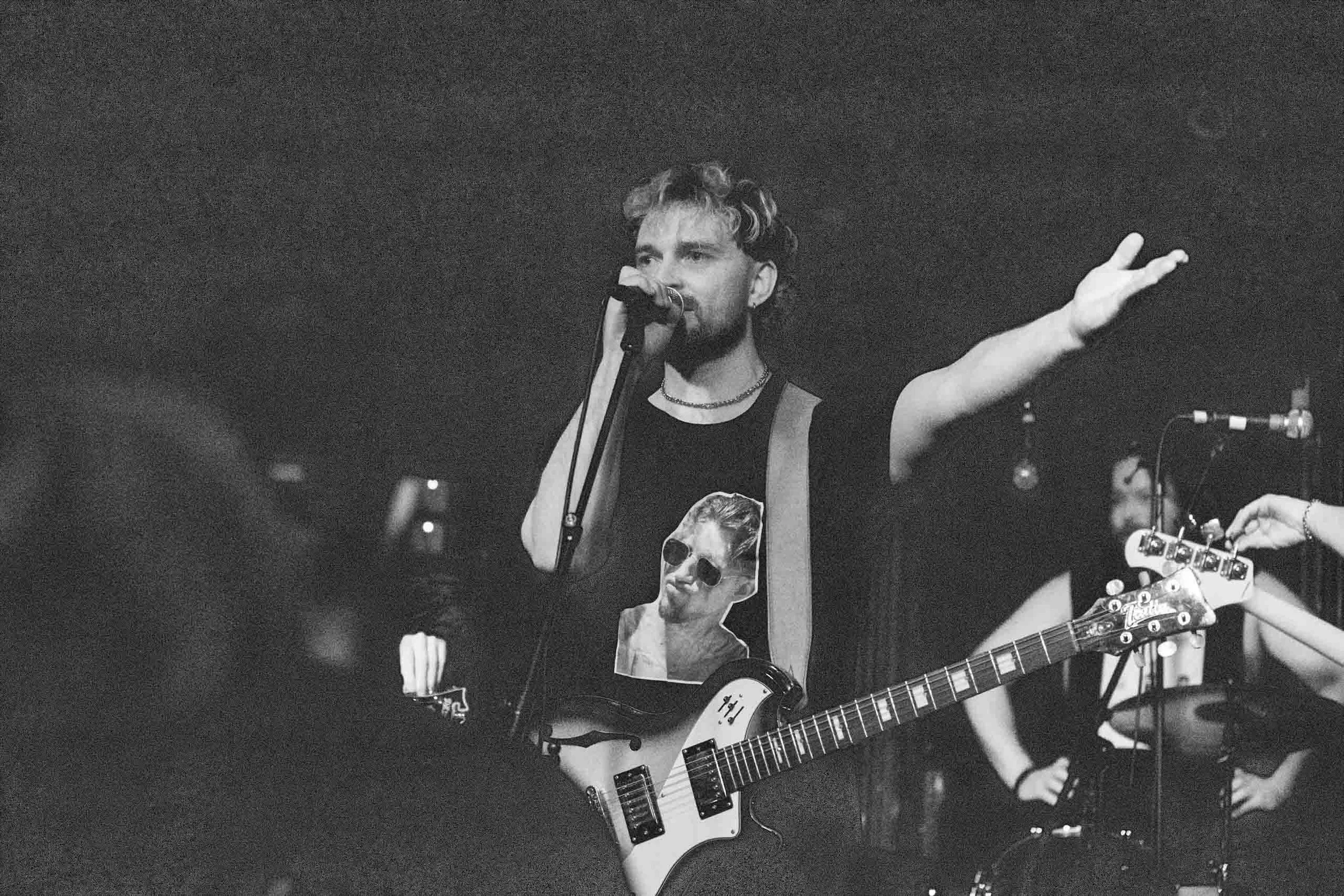
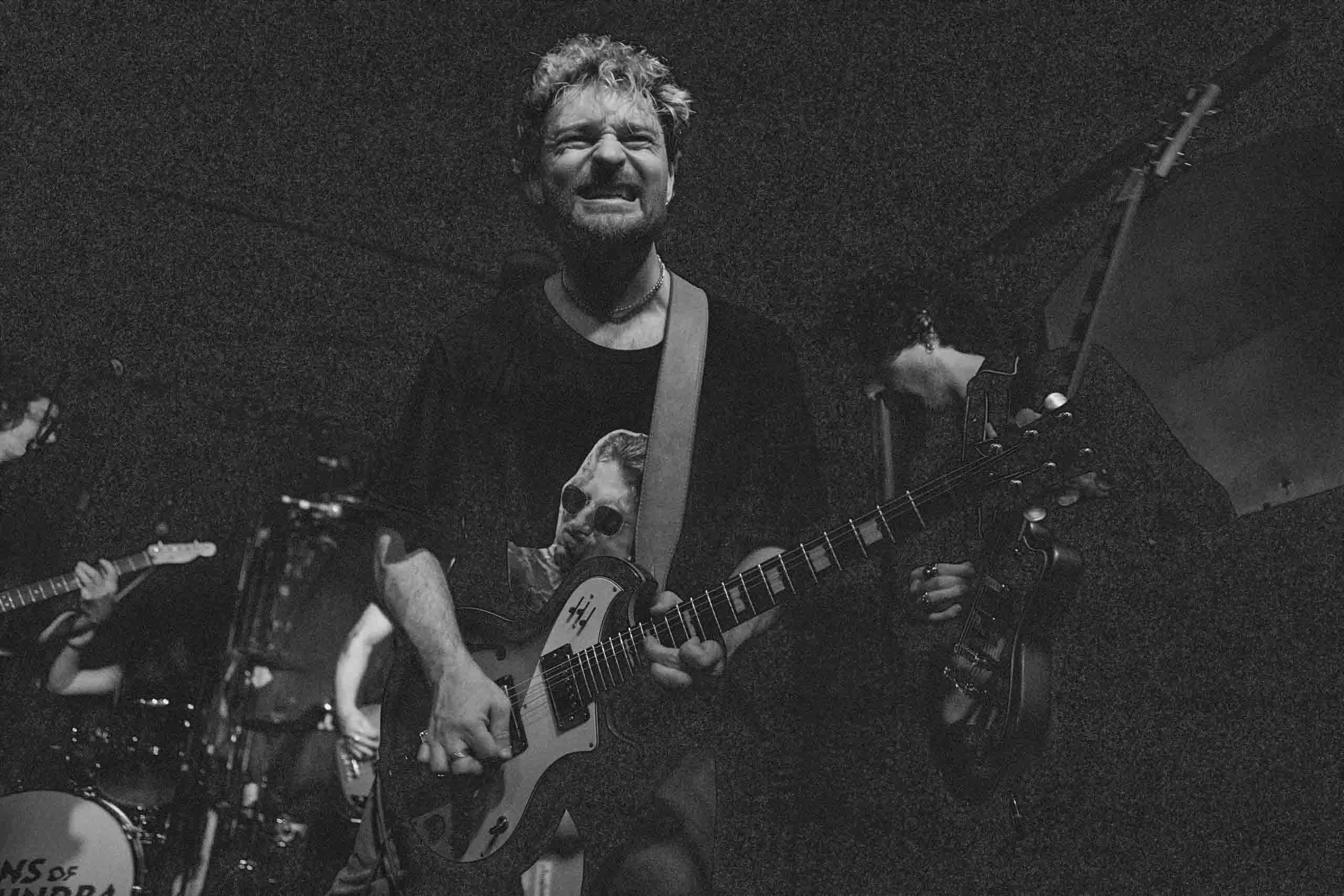
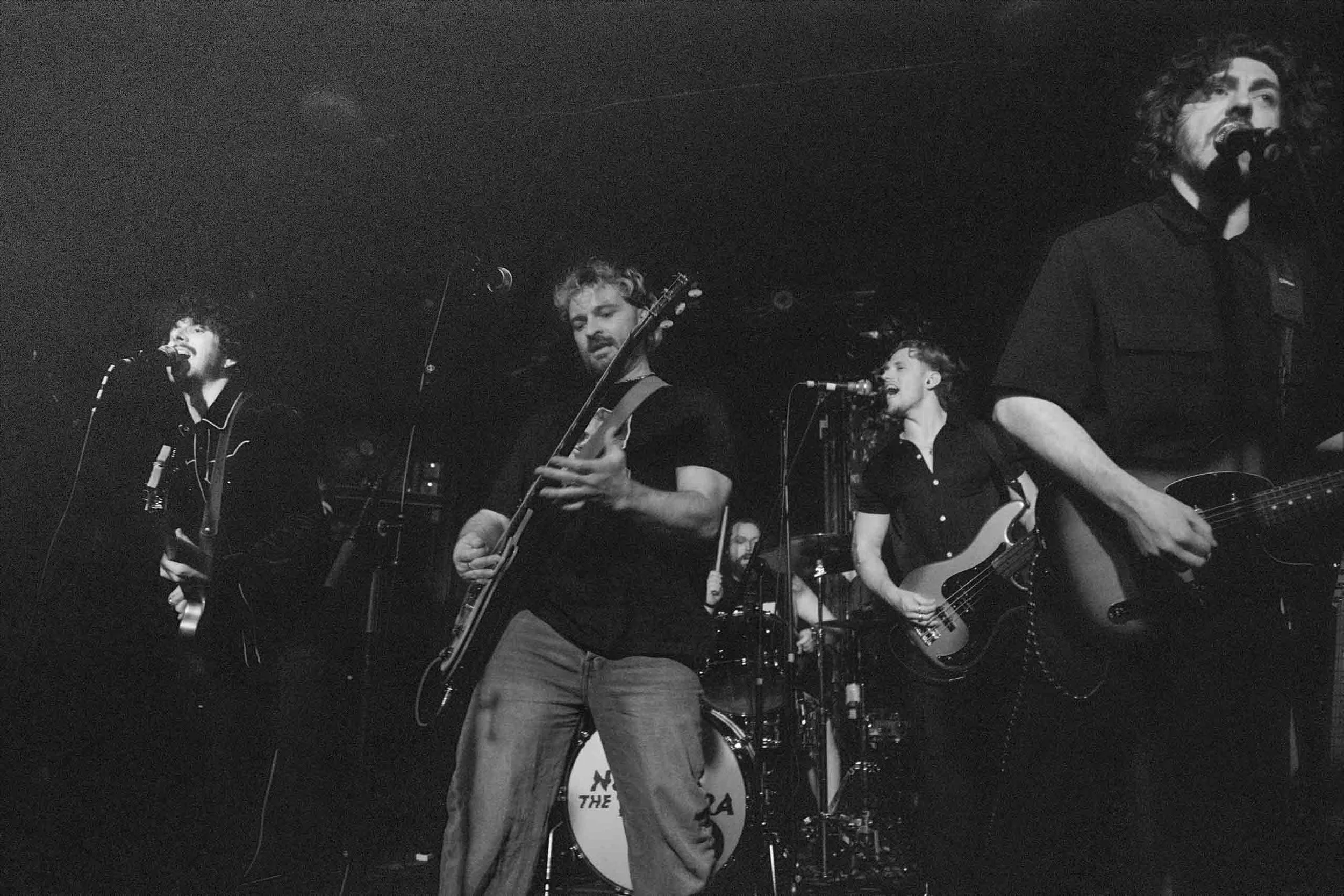
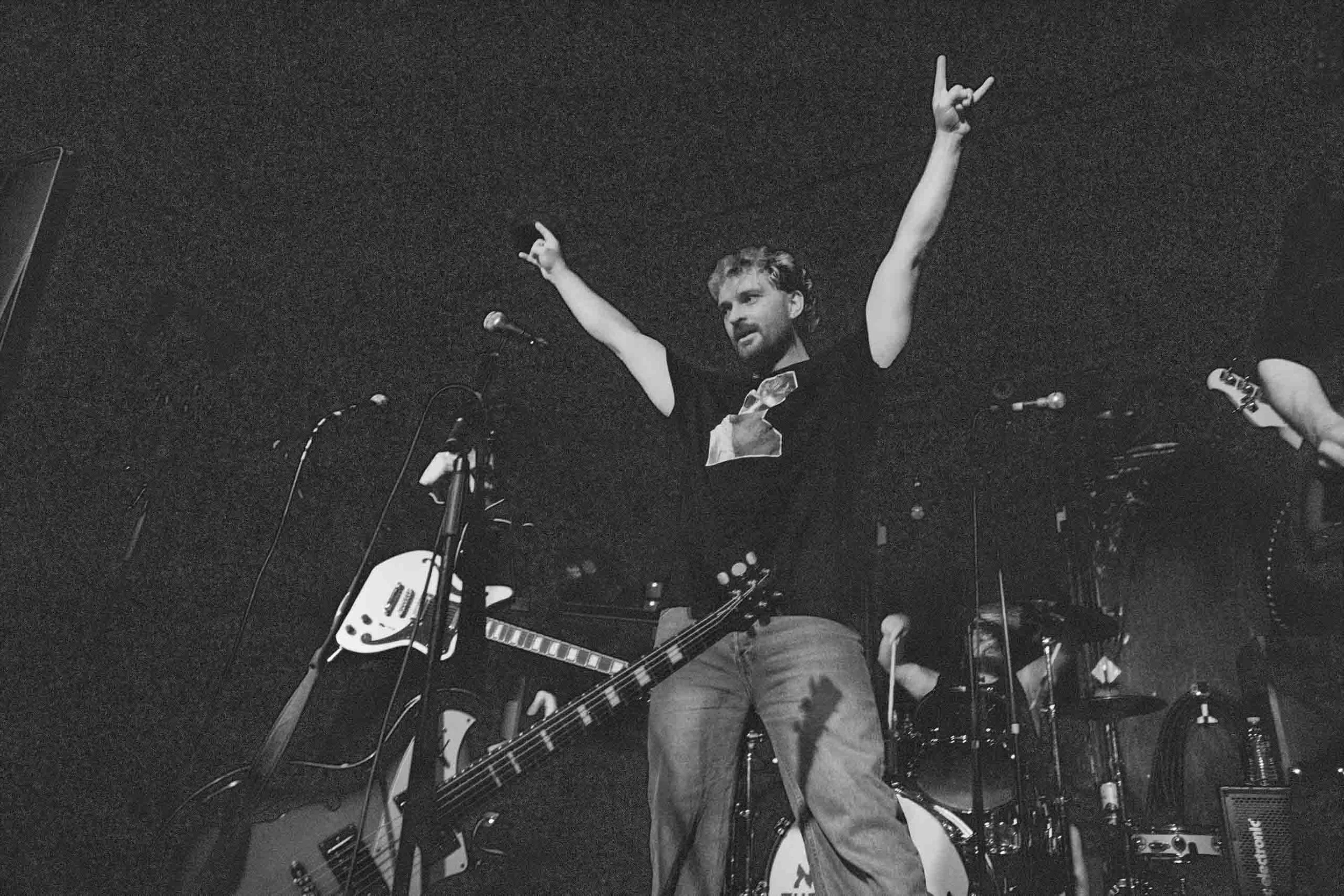
The Nuns are a genuinely fun band to photograph. Frontman Troy had the entire crowd shouting “Hell Yeah” back at him, while Hugo, Dan, Scott, and Mikey threw out riffs, fills, and solos with relentless energy.
This was one of those gigs that reminded me exactly why I love shooting live music.
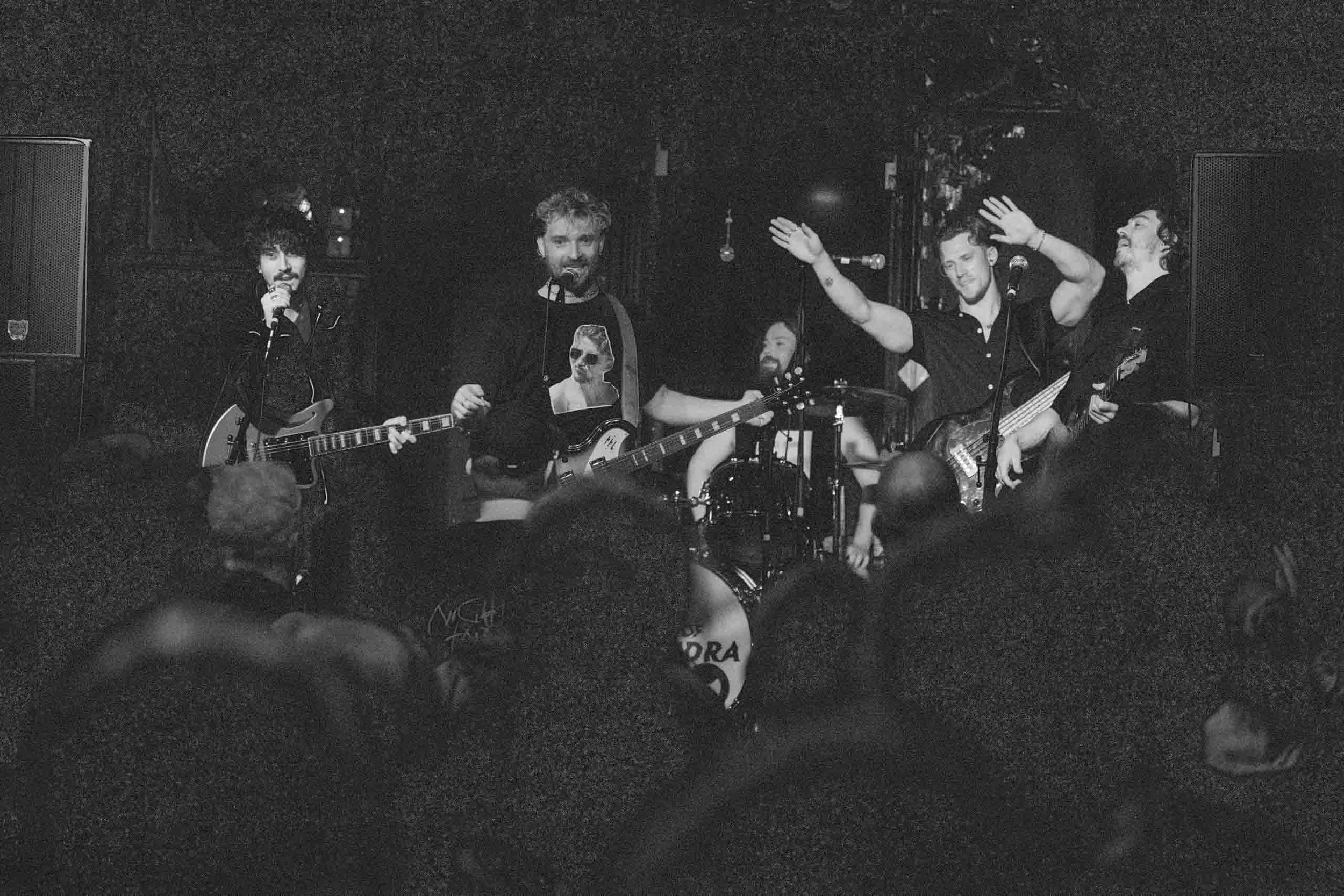
Troy’s T-shirt with bassist Mikey’s face in honour of his birthday that night.
Some bands stand still and let the music do the work. This was not one of those shows. A dynamic five piece band on a small stage, full of mic stands meant little room for movement and lots of overlapping guitar necks.
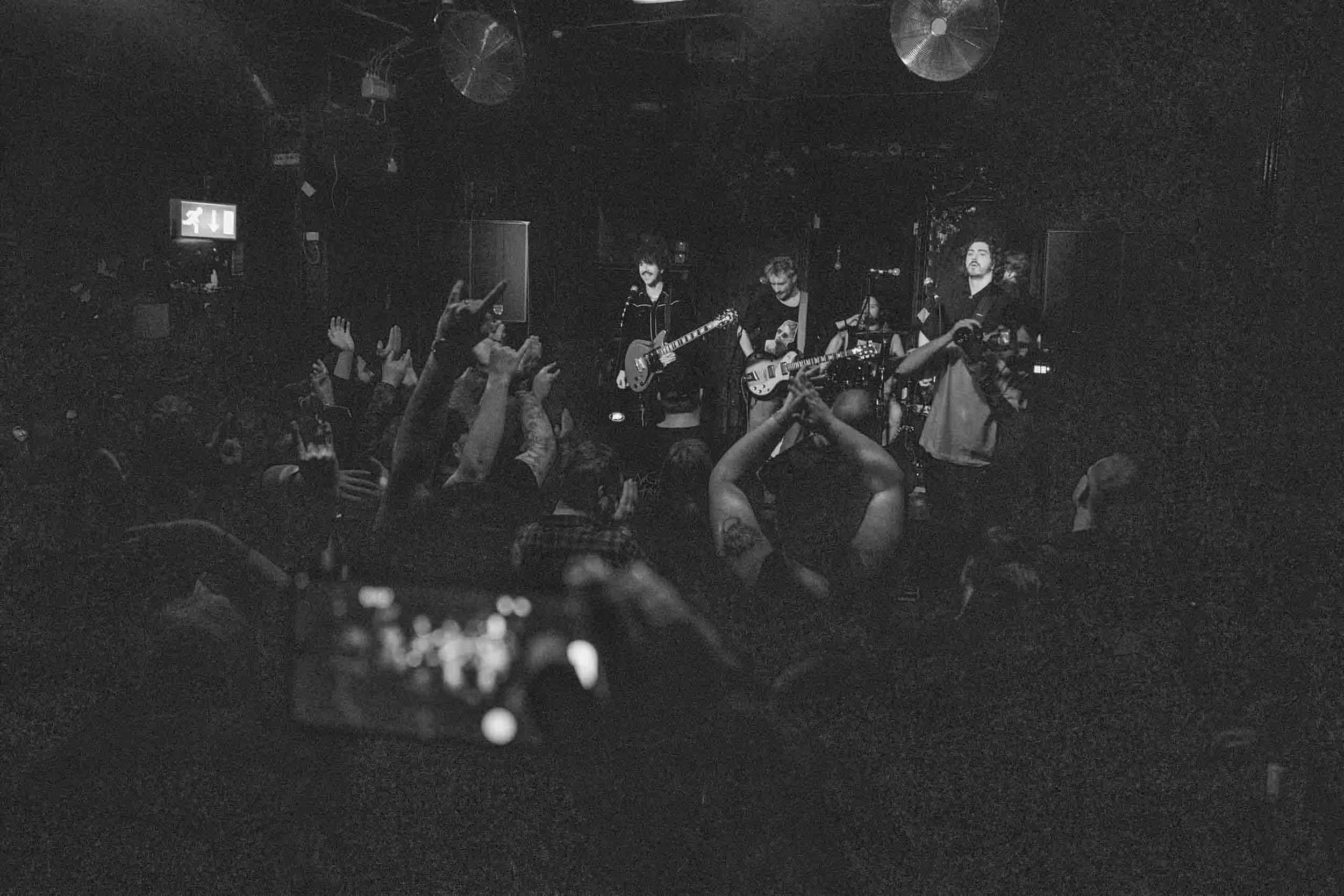
Even through the darkness there was always something happening worth capturing, and the crowd matched that energy completely.
As the set built, the room got louder, sweatier, and more chaotic until a full mosh pit opened up in front of the stage. At one point, in possibly the most supportive act of crowd participation I’ve experienced, one of the lads in the pit literally lifted me onto his shoulders so I could shoot over the crowd.
Sticky floors. Deafening amps. People crashing into each other in the pit. Two photographers jumping up on stairs, seating and tables. And, a stranger deciding this photographer needed a better angle.
Thank you to the lovely Nate from @CRTV who captured this video. Nate photographed and videoed the Nuns full tour, so keep an eye on his IG for some crisp and beautifully lit shots!
Live music crowds can be absolute chaos, but there’s also a real sense of community at gigs like this. Everyone wants to be part of the experience, including helping document it.
From above the crowd, camera in hand, watching the pit explode beneath the stage lights, I remember thinking: this is exactly the kind of atmosphere I want to keep photographing.
Then Came the Edit
Back in Lightroom, the problems started to appear.
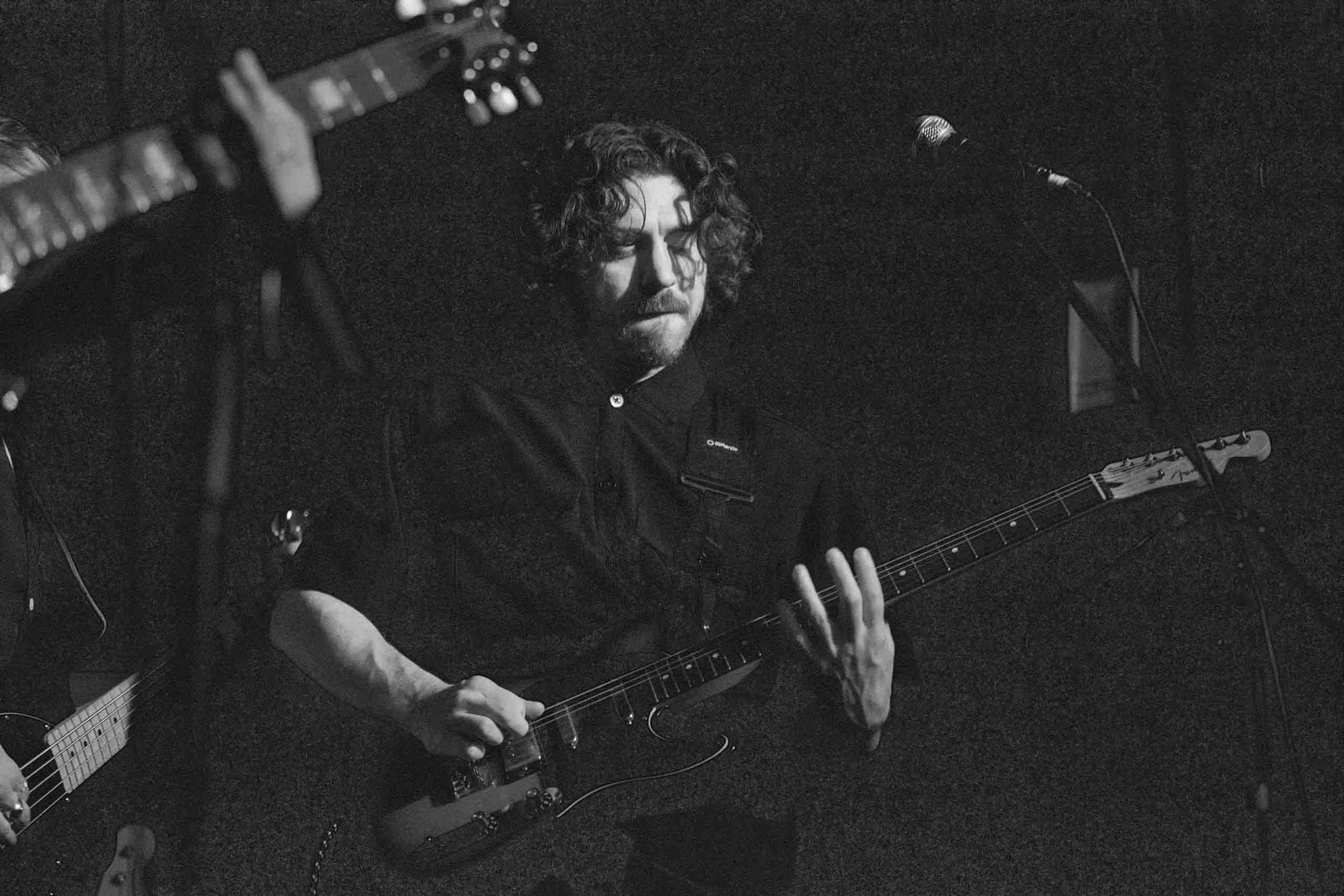
The shadows were thin. Really thin. The pixels were actually pushed to breaking point.
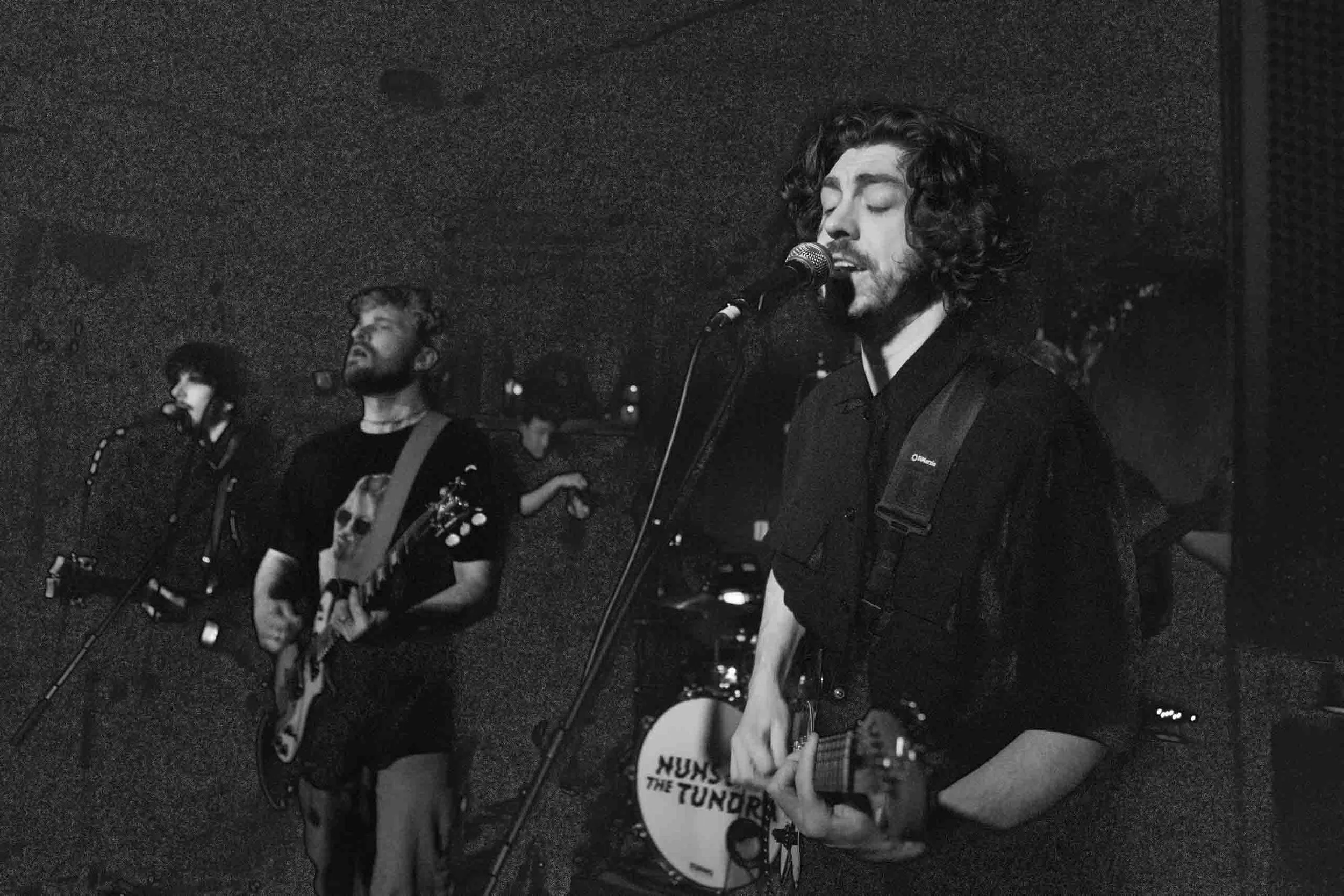
As I worked through the images, I found myself fighting the files more than shaping them. The deep blacks began breaking apart when I lifted the shadows. Grain became blotchy. Contrast adjustments turned muddy instead of cinematic.
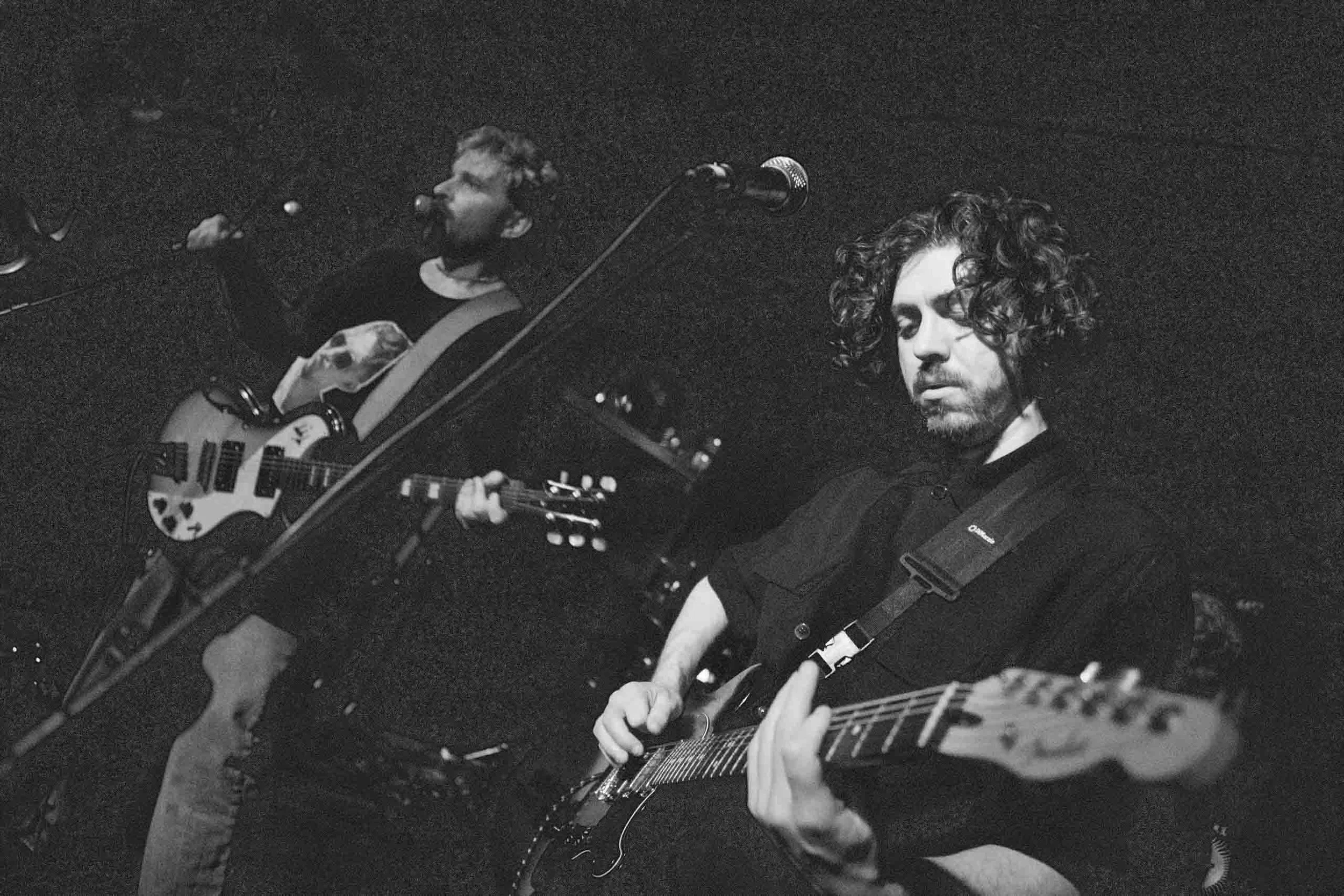
At first, I thought it was my processing.
I tested exports, changed sharpening settings, tweaked colour spaces, pulled clarity back, added noise reduction, and re-exported everything again.
But eventually the truth became clear, this was the end of the road.
My workhorse camera, the Canon EOS 5D Mark IV, now nearly ten years old, had simply reached its limit for this kind of work.
The Reality of Low-Light Music Photography
Live music photography is brutal on gear.
You’re asking a camera to:
autofocus in near darkness
preserve detail in black clothing and dim venues
handle rapidly changing coloured lights
freeze movement at high ISO
retain enough dynamic range for heavy editing afterwards
My old setup had served me well for years, but this shoot made me realise I was starting to work around the camera’s weaknesses instead of working freely.
That’s never a good sign.
Why I Switched to the Canon EOS R5
After this shoot, I made the jump to the mirrorless Canon EOS R5.
Not because it’s trendy.
Not because better gear magically makes better photographers.
But because I needed a camera that could keep up with the environments I actually shoot in.
For years, my Canon EOS 5D Mark IV had been an incredibly reliable workhorse. It still produces beautiful colours, handles wonderfully, and has earned its reputation for a reason. Plenty of professionals still use it for weddings, portraits, and events without issue.
But live music photography in near darkness is brutal on gear.
Compared to the 5D Mark IV, the R5 brings vastly improved autofocus tracking, far better low-light performance, in-body image stabilisation, faster burst shooting, and files that hold together much more cleanly when pushing shadows in post.
With the 5D, I found myself shooting cautiously in difficult lighting, compensating for the camera’s limitations instead of focusing entirely on timing and composition. The R5 feels far more capable of keeping up with chaotic stage movement, rapidly changing lighting, and fast performers without constantly fighting the files afterwards.
The live movement tracking and eye detection alone will be a game changer for the way I shoot gigs, and I’m genuinely excited to put it through its paces at the next show.
What This Shoot Taught Me
Honestly, the broken blacks and heavy grain almost work for the atmosphere. There’s something raw and uneasy about them that fits both the venue and the music.
But this shoot still became a turning point for me, and sometimes a difficult shoot is exactly what you need to realise you’ve outgrown your tools.
At the end of the day, I got to photograph an awesome gig and I had so much fun being there. I didn’t get the photo results I wanted, but it was a great craic.
Check out the Nuns on Spotify, and give them a follow on Insta for lots of feel good behind the scenes content.